
How we work
Work that leaves a clear record.
Understand the building. Coordinate the equipment. Leave your team with the drawings, checks and access to keep it operating.
 SOMA drawing standard
See how the work connects.
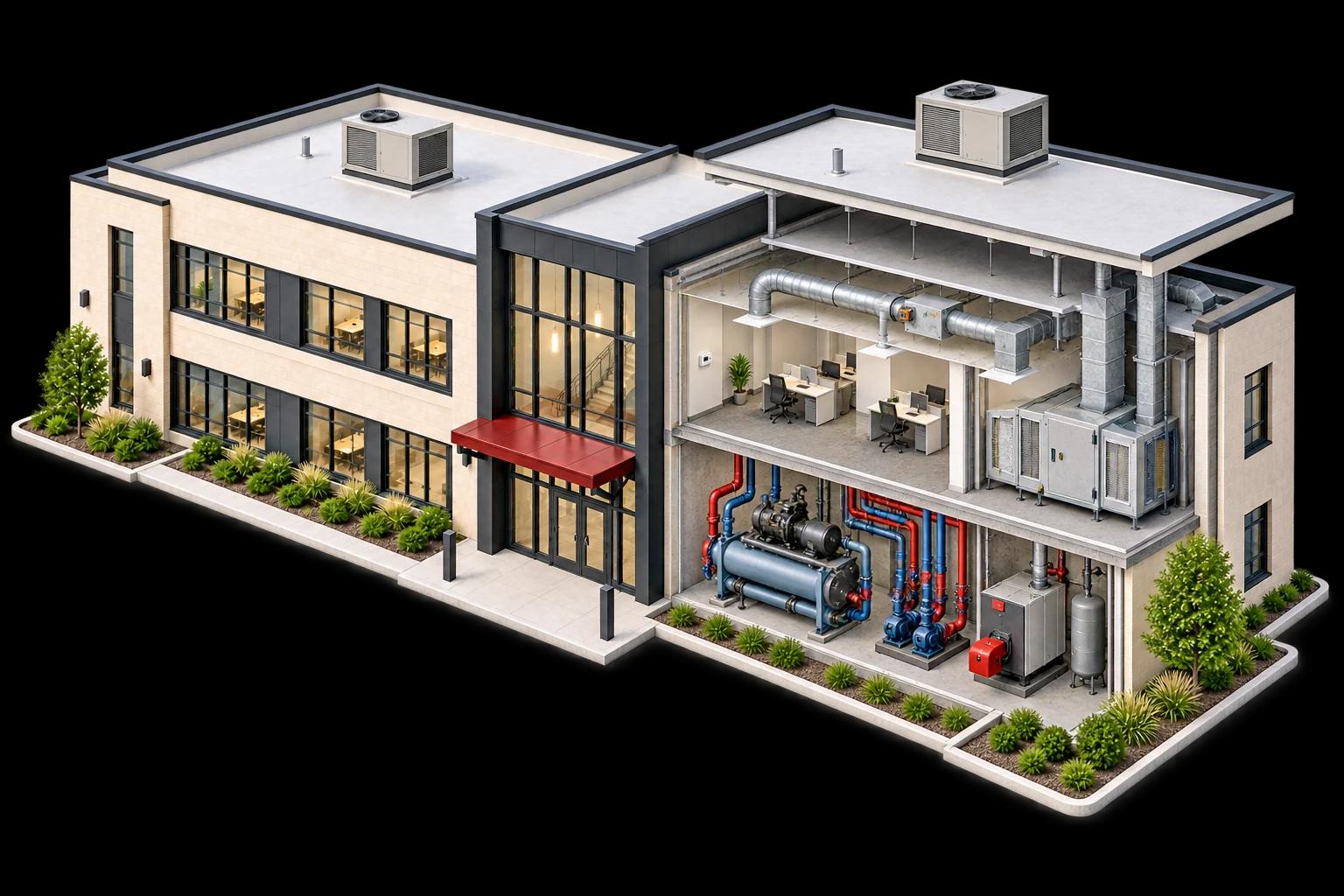
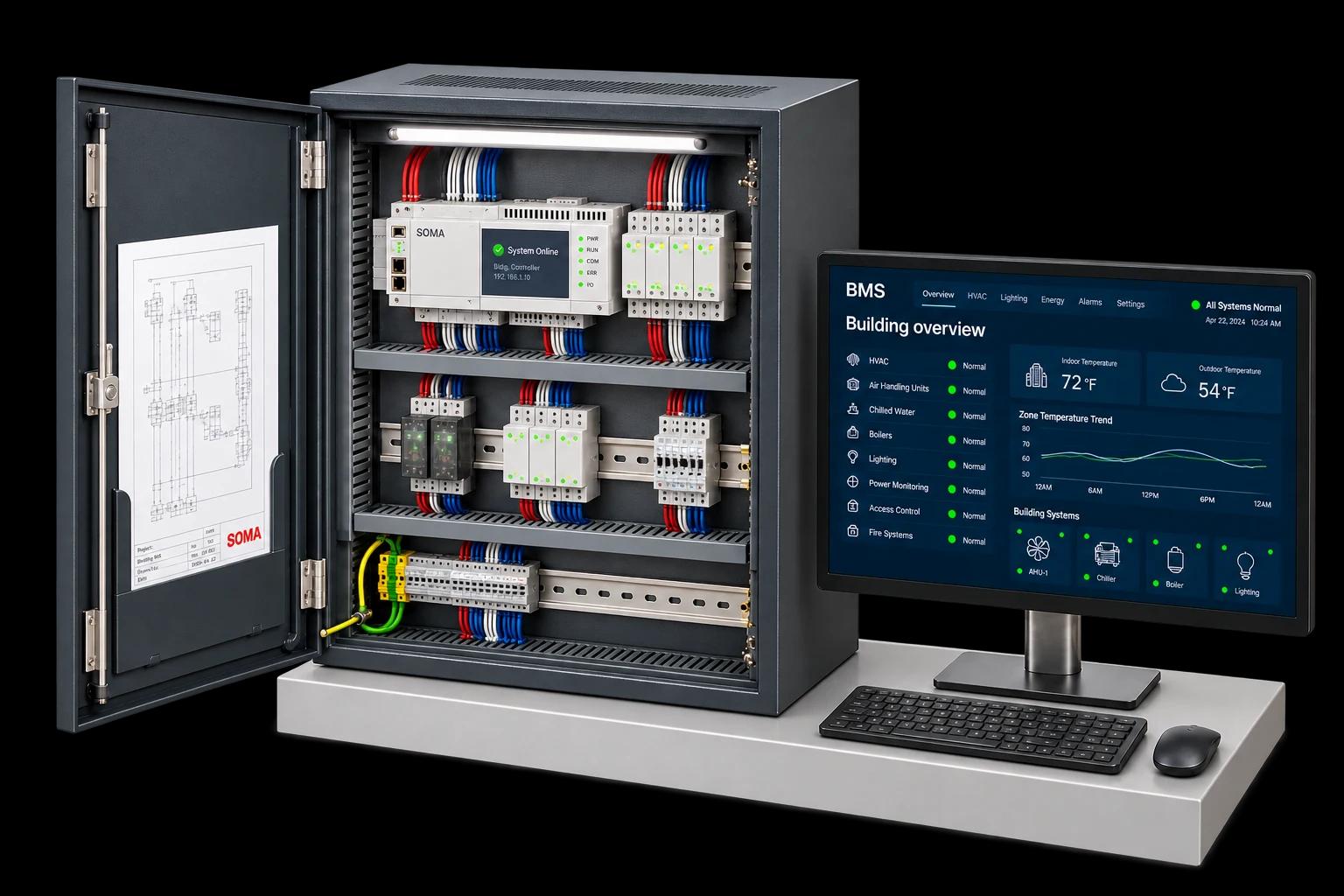
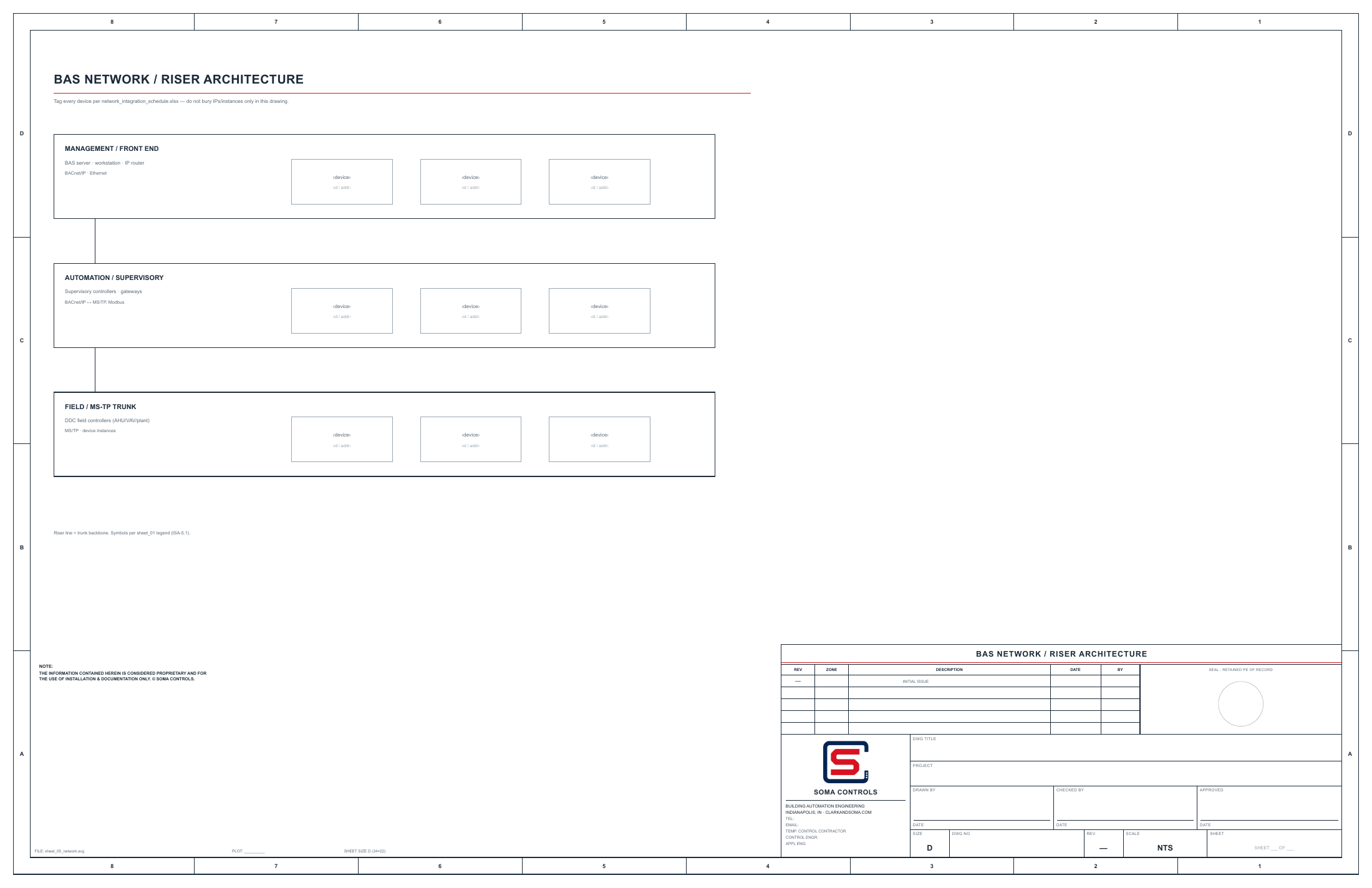
Follow the work from building to equipment to records. Inspect the drawing standard, blank checkout record and handoff examples along the way.
Understand the context
Find the connections before defining the work.
Review operating needs and trace the installed systems, equipment and available records into an agreed scope.
SOMA drawing standard
Network / riser architecture
A shared view of what exists and what should happen next.
Five steps. A continuous record.
Documentation stays with the work from the first walk-through to owner handoff.
Discover & Assess
Review the installed system, operating needs, risks, constraints, and available records. A Controls Assessment documents what exists and returns prioritized findings you own.
Controls AssessmentPlan & Design
Before implementation, agree on scope, priorities, system architecture, responsibilities, phases, and acceptance criteria. Plan the work around building operations.
Implement
Carry out the modernization, integration, optimization, or support work agreed in the plan, in stages, retaining controllers that remain suitable for the system.
View servicesCommission & Verify
Test sequences, data, alarms, trends, integrations, graphics, and operator workflows against the intended result and the submittal.
Blank functional checkout recordTrain & Hand Off
Provide usable records, credentials, operator orientation, findings, and next-step recommendations so your team has the information and access to operate the system.
Included with project work
Project work follows a consistent closeout standard. Records are kept current throughout delivery so the handoff reflects what was installed.
- Documented
- Point lists, sequence narratives, network diagrams, and as-built records kept current as the work happens.
- Commissioned
- Sequences, alarms, trends, integrations, and graphics tested against the intended result before handoff.
- Owner access and records
- Owner credentials, system data, and access turned over to you at handoff.
- Open and maintainable
- Open protocols and documented integration paths the next contractor can read and maintain.
- Operator training
- Operator orientation on the screens, alarms, and workflows your team actually uses.
- Records in your portal
- Closeout records organized in your client portal alongside project status and deliverables.
Deliverables and responsibilities are agreed for the project. Open the client portal
Start with the work in front of you.
Bring us the building, the installed controls and the records you have. We’ll help define the scope and the next step.