
Building Systems Integration
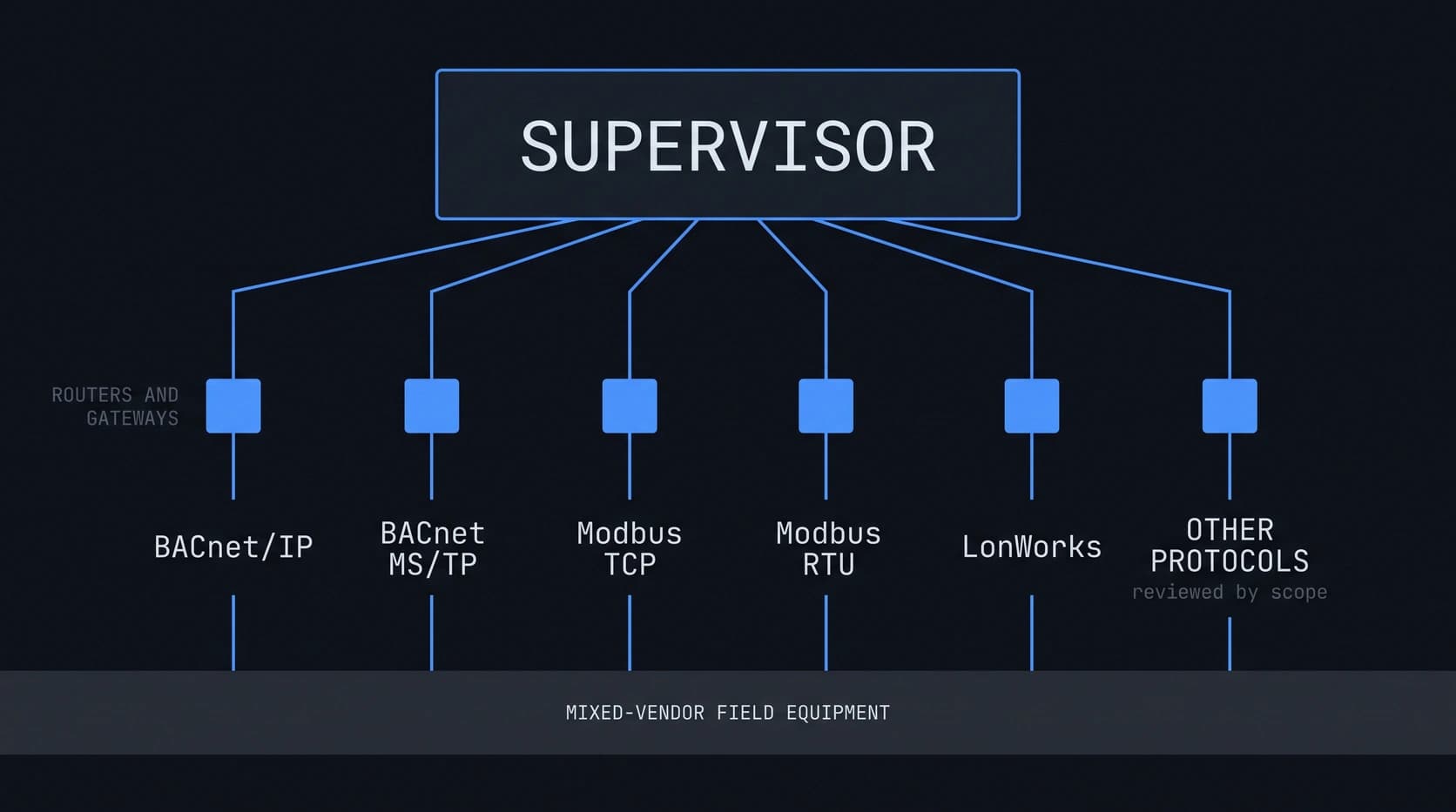
We integrate equipment, meters, and third-party systems using BACnet, Modbus, and Niagara-based supervisors. You receive documentation of the connections and retain ownership of the result.
Scope at a glance
Outcomes, deliverables, boundaries, and handoff in one place.
Operational outcomes
- One front end across multi-vendor equipment where the installed systems allow
- Open-protocol integration paths where the installed systems allow
- Documented, maintainable integration paths
- You keep clear ownership of the result
Deliverables
- One front end across your multi-vendor equipment where the installed systems allow
- An integration map and protocol plan
- Documented, maintainable integration paths over open protocols
- Validated data and control across the connected systems
Scope boundaries
- Field equipment, meters, and gateways require a separately agreed hardware and installation scope
- We do not perform electrical or mechanical installation labor
- We do not add a proprietary SOMA Controls layer or require our continued involvement
Handoff
You keep clear ownership of the integrated system and the documentation that describes it. Integration paths stay documented and maintainable by qualified others within the installed systems' access and licensing constraints.
See how the control layers connect.
Operator access, controllers and field devices each have a different job. A readable architecture makes their relationships easier to maintain.
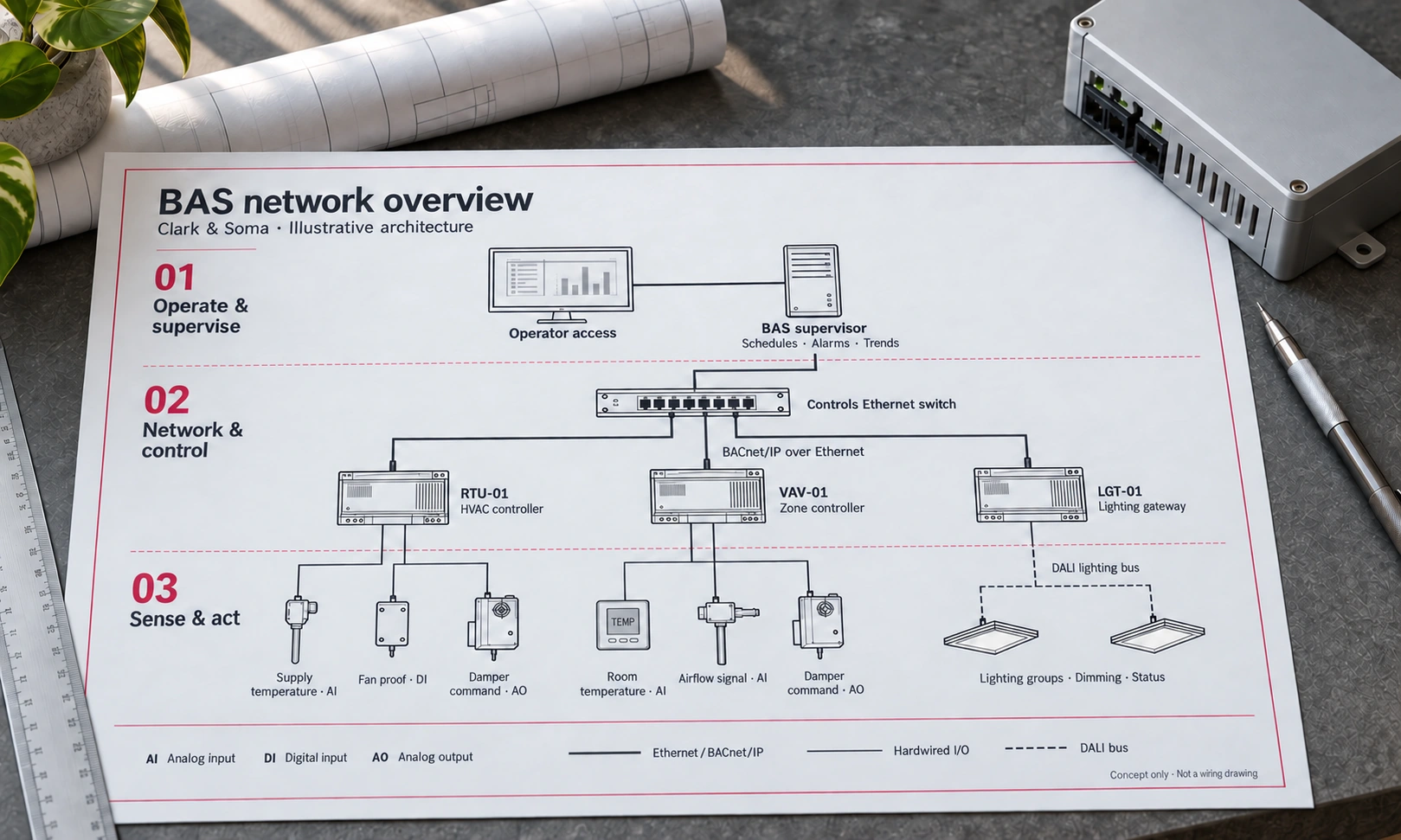
- Operate and superviseOperator access brings schedules, alarms and trends into view.
- Network and controlEthernet and BACnet/IP connect the supervisor to the equipment controllers.
- Sense and actTemperature, airflow and fan-proof inputs inform control. Outputs position dampers; the lighting controller uses a separate DALI bus.
Illustrative architecture, not a wiring drawing or customer installation. Open the image to inspect its labels.
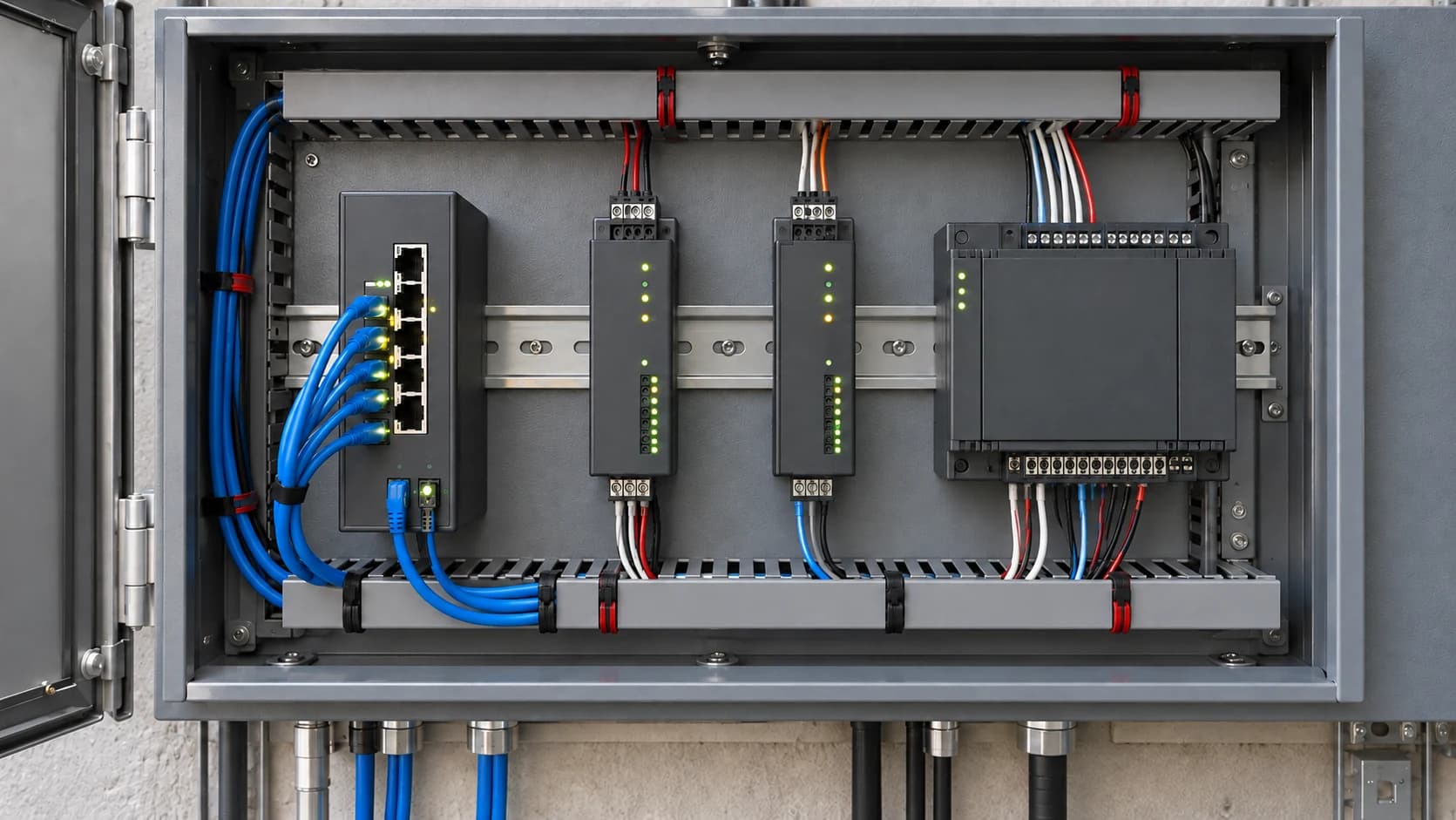
The equipment behind the connections.
An Ethernet switch, gateways and controllers give those network relationships a physical home.
Illustrative integration equipment, not a customer installation or a wiring reference.
Follow the air. See the response.
Trace a conceptual supply-air path from the rooftop unit to a selected floor. Explore the illustrated damper position with an optional ten-second sequence.
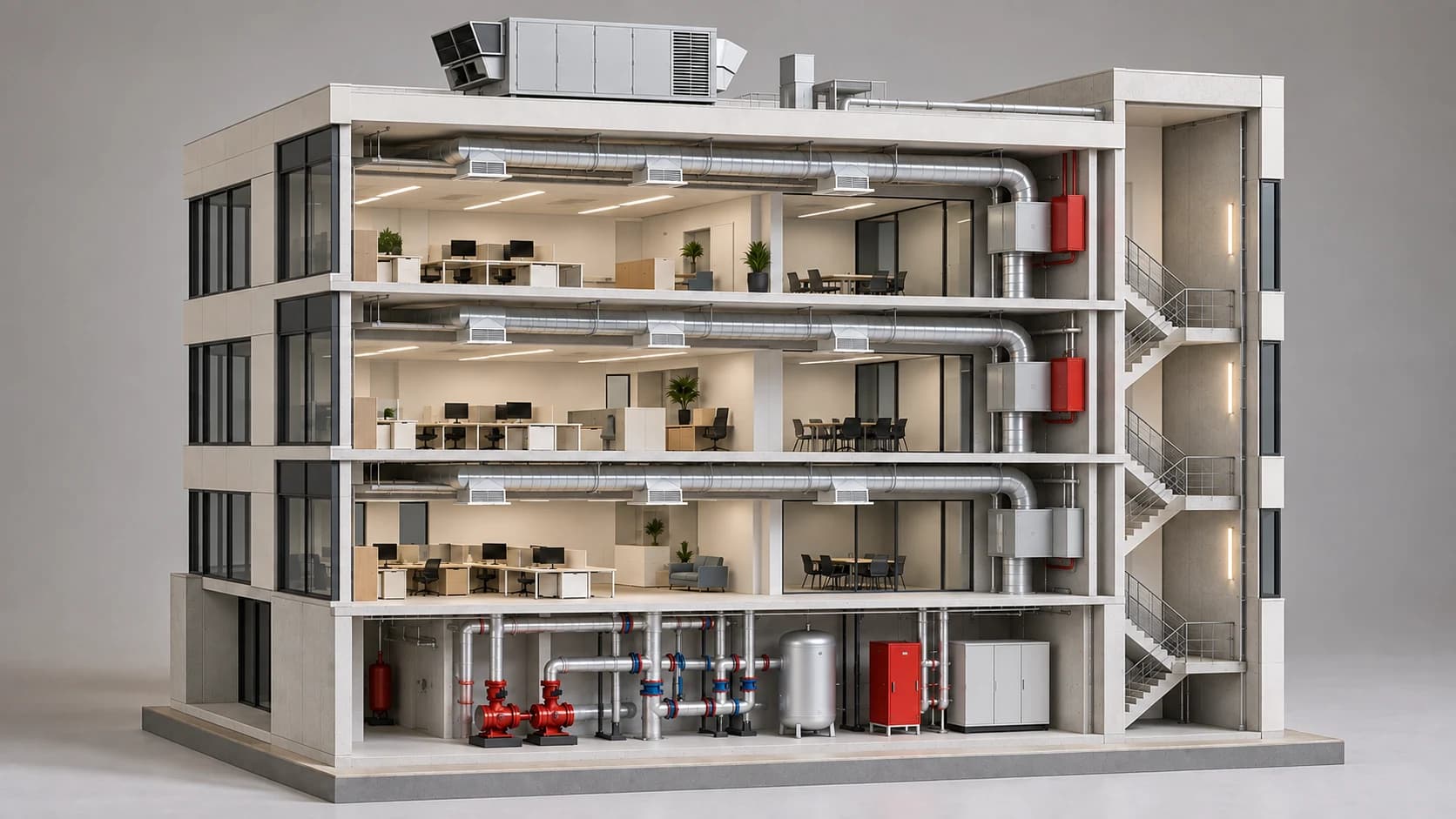
Explore a zone
These values are demonstration positions. They are not live building readings.
Static view. Interactive controls require JavaScript.
Blade angle only; percentage is not an airflow calculation.
The roof connection and damper locations are conceptual additions to the illustration. Return air, exhaust and a complete ventilation sequence are outside this view.
How it works
- 01
Discover
Inventory equipment, protocols, and data points.
- 02
Design
Plan the integration architecture and data model.
- 03
Build
Connect the systems through the agreed integration architecture.
- 04
Commission
Validate data and control across the systems in scope.
Common questions
What platforms do you work across?
Common open platforms such as Niagara, coordinating equipment from different manufacturers under one front end where conditions allow.
Do you support BACnet and Modbus?
Yes. We use open protocols where available and document any OEM-specific constraints.
Related controls services
- Controls AssessmentUnderstand what is installed, what is unclear, and what should happen next.
- Controls Retrofit & ModernizationUpgrade pneumatic controls, retrofit panels, and modernize aging BAS in planned stages.
- Energy & Sequence OptimizationTune sequences, schedules, setpoints, alarms, and trends around actual building operation.